Irish tax relief on dental implants abroad: what Revenue says about the Med 2
If you pay tax in Ireland, part of the cost of non-routine dental treatment, including implants, can be claimed back as health expenses relief. Revenue says treatment outside Ireland can qualify. Here is what its pages say, quoted carefully, and what to check before you rely on it.
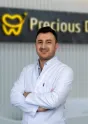 Medically reviewed by Dt. Hüseyin Yavuz Özbek, implant surgeon · Updated October 2026
Revenue lists implants, including bone grafting and bone augmentation, as non-routine dental treatment that qualifies for health expenses relief, and accepts claims for that kind of treatment carried out abroad, on two conditions: the treating dentist must be recognised as a dentist where they practise, and they must fill in Form Med 2. The tax back is normally worked out at the 20% standard rate, through your Income Tax Return, for up to four previous years, and only if you paid tax. Routine care, including extractions and dentures, is excluded. This article is information from Revenue's website, not tax advice.
Everything below is taken from Revenue's own web pages, checked on 24 October 2026, with links in the sources list. Tax rules change and individual situations differ. If in doubt, contact Revenue or a qualified tax adviser before you rely on a refund.
The rule in one paragraph
Ireland gives income tax relief on many health expenses you pay for yourself. Revenue's overview page says you can claim for your own health expenses, those of a family member, or anyone else's, as long as you paid them. You cannot claim for amounts you have received, or will receive, from an insurance policy, the HSE or any other source such as compensation. Revenue says relief for health expenses is generally given at your standard rate of tax, 20%. Dental treatment is split into routine care, which does not qualify, and non-routine care, which does.
What counts as non-routine dental treatment
Revenue's dental expenses page gives two lists. They are worth reading closely, because full-mouth implant treatment usually involves items from both.
Crowns; veneers or Rembrandt-type etched fillings; tip replacing; gold or fibreglass posts; inlays; endodontics (root canal treatment); periodontal treatment for gum disease such as root planing and gum flaps; chrome cobalt splints (but not if they contain teeth); implants, including bone grafting and bone augmentation; orthodontic treatment; surgical extraction of impacted wisdom teeth; bridgework (enamel-retained or tooth-supported).
Fillings; scaling or cleaning; tooth extraction; providing or repairing artificial teeth or dentures.
Two points stand out for full-mouth readers. Implants, bone grafts and bone augmentation are named as non-routine. Ordinary extractions and dentures are named as routine. A full-mouth plan can contain all of these, so the way the treatment is described and itemised matters. Revenue's lists do not mention implant-supported full-arch bridges by name; bridgework and crowns are on the non-routine list, and implants are on it, but we have not found a Revenue statement on how a full-arch bridge fixed to implants is classified. That is a question for Revenue, not for us to answer.
Treatment outside Ireland
This is the part most people search for. Revenue's dental expenses page says:
"You can claim for non-routine dental treatment performed outside of Ireland. To qualify for relief, the dentist must be a qualified dentistry practitioner under that country's laws. You must have the dentist complete a Form Med 2 for your claim."
Revenue's page on qualifying expenses adds that, for health care received outside Ireland, the practitioner must be registered under that country's laws to practise medicine or dentistry there.
Travel and accommodation: read the condition carefully
The same page says that if you travel abroad to receive health care that is not available in Ireland, you can also claim reasonable accommodation and travel costs, and those of a person who accompanies you if your condition requires it. Dental implants are widely available in Ireland. On a plain reading, the travel and accommodation part may therefore not apply to most implant trips. We are not in a position to say how Revenue would treat a particular case; ask Revenue directly if this part matters to your decision.
The Form Med 2
The Med 2 is a Revenue form headed "Dental expenses certified by dental practitioner". Revenue explains that:
- The dentist normally gives you a Med 2 after your treatment.
- Treatment that crosses into a new year needs one Med 2 per year from the dentist.
- The Med 2 is a receipt for your dental expenses, not the claim form.
- The form stays with you rather than going to Revenue; hold on to it in case Revenue reviews your claim later.
The form itself asks the dental practitioner to record the nature of the treatment, the dates it was carried out and paid for, the amounts, and the practitioner's details, and to certify that the particulars are correct. For treatment abroad, that means your overseas dentist needs to fill it in. Before you book anywhere, ask whether the clinic will do this.
How you actually claim
Revenue's "How do you claim health expenses?" page says health expenses are claimed through your Income Tax Return. Key points:
- PAYE taxpayers can claim through myAccount, either at the end of the year or in real time during the year.
- Self-assessed taxpayers claim in the health expenses section of the annual Form 11 through ROS.
- You can claim for the last four years, but each year is a separate claim.
- Relief is given as a tax refund, so you must have paid tax in that year.
- If you have private health insurance, you can claim on the part of a qualifying expense your insurer did not cover.
- Keep original receipts, including Med 2 forms, for six years.
Treatment split across two years
Full-mouth implant treatment is usually done in two visits several months apart, so it can easily span two tax years. Revenue says that if you receive care in one year and pay in the next, you can choose to claim in the year you received the care or the year you paid. Its worked example: €1,000 of treatment, with €700 paid in 2025 and €300 in 2026, can be claimed as €1,000 in 2025, or as €700 in 2025 and €300 in 2026. Because each tax year also needs its own Med 2, it is worth keeping your invoices for each visit separate and clearly dated.
A simple worked illustration
Using only Revenue's 20% standard-rate figure: if your qualifying non-routine dental expenses in a year came to €5,000 and you had paid at least €1,000 in income tax that year, the relief would be €1,000. If you had paid less tax than that, the refund could not exceed the tax you paid. This is arithmetic on Revenue's stated rate, not a prediction for your claim.
Prices at Precious Dental, which publishes this site, are set in pounds sterling. A fixed full arch on four implants per jaw is £6,000 ≈ €7,170 · US$8,020 for both jaws, and on six implants per jaw £6,500 ≈ €7,760 · US$8,690. Those package prices include items Revenue lists as excluded or conditional, such as extractions, hotel nights and transfers, so the qualifying amount would not simply be the package price. You can convert other figures with our cost converter, and see the full price list on our prices page. Remember that Revenue relief is claimed in euro on what you actually paid, and the exchange rate your bank or card applies will differ from our reference rate.
Questions to settle before you book
- Will the clinic complete a Form Med 2? Get the answer in writing.
- Is the dentist registered to practise in that country? Revenue's condition is registration under that country's laws. Precious Dental's implant surgeon, Dt. Hüseyin Yavuz Özbek, is registered with the Turkish Dental Association (TDB number 49105), and the clinic is licensed by the Turkish Ministry of Health.
- How will the invoice itemise implants, grafts, extractions, teeth and accommodation? Clear itemisation makes the Med 2 easier to complete accurately.
- Will each visit be invoiced and certified separately? Useful if treatment spans two tax years.
- Does any of my private health insurance cover it? Revenue relief only applies to the part you paid yourself.
Our travel guide for readers in Ireland covers flights, entry to Türkiye and aftercare at home. If you have a question for us about paperwork, ask before you book; we would rather say "we cannot do that" at the start than leave you surprised at tax time.
Revenue lists implants and bone grafting as non-routine dental treatment and says treatment abroad can qualify, with a Med 2 completed by a dentist registered in that country. Relief is generally 20%, claimed through your tax return. Extractions and dentures are excluded, and travel costs only qualify for care not available in Ireland.
Common questions
Can I claim tax relief in Ireland for implants done in Turkey?
Yes, in principle. Revenue accepts non-routine treatment received abroad when the treating dentist is legally qualified in that country and signs off a Form Med 2 for you. Implants are on Revenue's list of non-routine treatments.
How much relief do I get?
Revenue says health expenses relief is generally given at your standard rate of tax, 20%. It is a refund of tax you have paid, so you must have paid at least that much income tax in the year.
Is the hotel and flight cost covered?
Revenue says travel and accommodation costs can be claimed if you travel abroad to receive health care that is not available in Ireland. Implants are available in Ireland, so check with Revenue before assuming these costs qualify.
Do I send the Med 2 to Revenue?
No. Revenue says the Med 2 is a receipt, not the claim form. You keep it with your records for six years and Revenue may ask to see it if your claim is checked.
Will Precious Dental complete a Med 2 for me?
Ask us before you book. We will confirm in writing whether we can complete the form and how the treatment amounts will be itemised.
Is this tax advice?
No. It is a summary of Revenue's published pages, checked on 24 October 2026. Your own circumstances may differ; contact Revenue or a tax adviser if you are unsure.
Sources
- Revenue (Irish Tax and Customs). Dental expenses
- Revenue. Health expenses: overview
- Revenue. What are qualifying health expenses?
- Revenue. How do you claim health expenses?
- Revenue. Form Med 2: Dental expenses certified by dental practitioner (PDF)
Checked October 2026. Where we give our own view as a clinic, we say so.
Get your own full-mouth plan and price in writing
Send a recent panoramic X-ray or CBCT scan, or a few clear photos. Our implant surgeon reviews them and you receive an itemised plan in pounds, with approximate euro and dollar figures, before you book anything.