Am I a candidate? A health-factor checker
Eight questions about health factors that studies link with implant problems. For each yes you get a short explanation with its source, and a suggestion of who to talk to. There is no pass or fail.
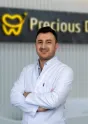 Medically reviewed by Dt. Hüseyin Yavuz Özbek, implant surgeon · Updated October 2026
Few health conditions rule out implants on their own. Head and neck radiotherapy and bone-strengthening drugs such as bisphosphonates or denosumab need a specialist assessment first. Smoking, poorly controlled diabetes, tooth grinding, a history of gum disease and difficulty cleaning are linked with more problems and are planned around. Blood thinners are managed with your prescriber, never stopped on your own.
The eight questions
Educational only, not a diagnosis or a yes/no decision on treatment.
How to read your summary
The checker sorts answers into two groups. Two questions, about bone medicines and radiotherapy, lead to "talk to your doctor and an implant surgeon before planning", because both change how bone heals and both need input from the doctor who treated you. The other six lead to "things to plan around". Each is linked with more problems in the research, and each is something a surgeon asks about routinely.
Nothing in the checker is a verdict. Studies describe groups of people, while you are one person with a particular jaw, a particular medicine history and particular habits. A raised risk in a meta-analysis can still mean that most people in that group did well.
Why these eight factors
We chose factors that come up repeatedly in systematic reviews of implant outcomes and that a reader can answer without tests. Several other things matter just as much but need an examination: how much bone you have, the health of any remaining teeth, your bite, and how wide you can open your mouth. Bone is covered on the bone-loss stages page, and the numbers behind each risk are gathered on the risk-factor data page.
Age is missing on purpose. None of the reviews cited here sets an upper age limit. What changes with age is the likelihood of medicines, conditions and dexterity problems, which the questions already ask about.
What the checker cannot see
Some of the most important questions have no yes or no answer. How thick is the bone where the implants would go? Are the sinus floors low? Where does the nerve run in your lower jaw? Is any remaining tooth infected? Those answers come from a 3D scan read by a surgeon, which is why every full-arch plan at Precious Dental is made on one. The anatomy section explains what the surgeon is looking for, and the evidence library summarises the studies quoted on this page in more detail.
What to bring to a consultation
- A list of your medicines with doses, including any you took in the past for osteoporosis or cancer.
- A recent HbA1c result if you have diabetes.
- Details of any radiotherapy: when, where, and the dose if you have it.
- A panoramic X-ray or CBCT scan if you have one; if not, clear photos of your teeth.
- Your answers to this checker, so the conversation starts in the right place.
You can send these to Precious Dental through the contact page. Our implant surgeon reviews them before any plan is written. If you live a long way from Antalya, it also helps to find a local dentist willing to see you for check-ups afterwards; our travel guides have notes on aftercare for each region.
Common questions
Am I too old for full-mouth implants?
Age is not one of the questions because, on its own, it is rarely the deciding factor. General health, bone, medicines and your ability to keep implants clean matter more.
The checker gave me several things to plan around. Should I give up?
No. These factors raise the chance of some problems in studies; they do not decide your case. A surgeon looks at the whole picture, and often the answer is a change of plan rather than a no.
Should I stop my blood thinner before surgery?
Never stop or change a blood thinner without advice from the doctor who prescribed it. Dental guidance exists for assessing bleeding risk, and most decisions are made jointly between your doctor and the surgeon.
I took bisphosphonate tablets years ago. Does that count?
Tell the surgeon anyway, with the name of the drug, the dose and how long you took it. Past and present use both matter for the risk of medication-related osteonecrosis of the jaw.
Does Precious Dental see these answers?
No. The checker runs in your browser and sends nothing. If you contact us, tell us about your health in your own words and we will ask what we need.
Sources
- Chrcanovic BR, Albrektsson T, Wennerberg A. Smoking and dental implants: A systematic review and meta-analysis. J Dent 2015. PMID 25778741
- Chrcanovic BR, Albrektsson T, Wennerberg A. Diabetes and oral implant failure: a systematic review. J Dent Res 2014. PMID 24928096
- Chrcanovic BR, Albrektsson T, Wennerberg A. Dental implants in irradiated versus nonirradiated patients: A meta-analysis. Head Neck 2016. PMID 25242560
- Häggman-Henrikson B, Ali D, Aljamal M, Chrcanovic BR. Bruxism and dental implants: A systematic review and meta-analysis. J Oral Rehabil 2024. PMID 37589382
- Sgolastra F, Petrucci A, Severino M, et al. Periodontitis, implant loss and peri-implantitis. A meta-analysis. Clin Oral Implants Res 2015. PMID 24382358
- Monje A, Aranda L, Diaz KT, et al. Impact of Maintenance Therapy for the Prevention of Peri-implant Diseases: A Systematic Review and Meta-analysis. J Dent Res 2016. PMID 26701350
- American Association of Oral and Maxillofacial Surgeons: Position Paper on Medication-Related Osteonecrosis of the Jaws, 2022 update (PubMed 35300956)
- Scottish Dental Clinical Effectiveness Programme: Management of Dental Patients Taking Anticoagulants or Antiplatelet Drugs, 2nd edition, March 2022
Checked October 2026. Where we give our own view as a clinic, we say so.
Get your own full-mouth plan and price in writing
Send a recent panoramic X-ray or CBCT scan, or a few clear photos. Our implant surgeon reviews them and you receive an itemised plan in pounds, with approximate euro and dollar figures, before you book anything.