From the United States to Antalya for full-mouth implants
For American readers the treatment is the easy part to understand. The harder part is distance: a connection, seven to eleven hours of time difference, and a long flight home after surgery. This guide is about planning around that.
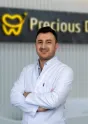 Medically reviewed by Dt. Hüseyin Yavuz Özbek, implant surgeon · Updated October 2026
US citizens with ordinary passports are exempt from a Turkish visa for stays of up to 90 days in any 180-day period, according to Türkiye's Ministry of Foreign Affairs (checked 24 October 2026). Türkiye requires a passport valid at least 60 days beyond your permitted stay, so 150 days for a full 90-day stay. There are no simple nonstop routes to Antalya from most of the US; people usually connect in Istanbul or Europe. Plan a rest day before surgery and talk to your doctor about blood-clot prevention for the flight home.
Entry rules for US citizens (checked 24 October 2026)
The Republic of Türkiye Ministry of Foreign Affairs lists United States ordinary passport holders as "exempted from visa up to 90 days in any 180-day period". Official passport holders need a visa. That covers almost every reader of this page: a full-arch treatment trip is well inside 90 days, and the two trips together are too, as long as they fall in different 180-day windows or add up to less than 90 days.
The same ministry sets a passport rule for all visitors: your passport must expire at least 60 days after the end of your permitted stay. For the full 90 days that means 150 days of validity when you land. The MFA also advises a passport valid for six months from arrival, which is the simplest target. Leave blank pages for the entry and exit stamps.
The US State Department keeps its own Türkiye page with entry, exit and safety information. Find it at travel.state.gov and read it before booking and again shortly before you fly.
The visa exemption is general, but Türkiye's visa system also includes a "Medical Treatment Purposes" category, and the government's HealthTürkiye portal runs a medical visa application. If you are unsure which applies to a dental treatment visit, ask the Turkish Embassy in Washington or a Turkish consulate before you book. We cannot give immigration advice.
Getting from the US to Antalya
Antalya Airport (AYT) is mainly a European leisure airport. From North America, the usual pattern is a long-haul flight to Istanbul or a European hub, then a short flight to Antalya. Some travellers prefer to break the journey with a night in Istanbul, which turns one exhausting day into two manageable ones. Routes and timings change by season and airline, so check airline sites and avoid tight connections on the inbound trip: missing surgery day because of a delayed connection costs more than an extra hotel night.
Precious Dental's package includes airport and clinic transfers in Antalya and the hotel nights (4 on the first visit, 5 on the second). Flights, and any stopover nights on the way, are yours to book.
Time difference and the case for a rest day
Türkiye stays on UTC+3 all year. Antalya is about 7 hours ahead of the East Coast in summer and 8 in winter, and about 10 to 11 hours ahead of the West Coast. That is a large eastward shift, which is the harder direction. The CDC Yellow Book gives an average rate of adaptation of 1 hour per day after eastward travel and 1.5 hours per day after westward travel.
You will not adapt fully before surgery, and you do not need to. What matters is not arriving after a sleepless night. We suggest landing at least one full day before surgery. Some people arrive two days early for the first trip, when the surgery is longest, and one day early for the second. If you want to work the dates through, the timeline tool lets you add travel days on either side, and our article on jet lag and surgery after long-haul flights goes into more detail.
Blood clots on the flight home
The CDC says anyone travelling more than four hours by air, car, bus or train can be at risk of blood clots, and that the risk rises with other factors, including surgery in the past three months and age over 40. A full-arch patient flying home to the US ticks both boxes. The CDC's practical advice is to move your legs and walk around every one to two hours, exercise your calves, know the warning signs, and talk to your doctor before travel if you have risk factors. Your doctor may suggest compression stockings. If you take a blood thinner, the surgical team needs to know well before surgery day, so tell us when you send your X-ray.
What to pack for the treatment trip
- Passport with six months' validity and blank pages.
- Any recent panoramic X-ray or CBCT scan, as files you can send ahead. The surgeon plans the case from a 3D scan; if you do not have one, the scan is taken in Antalya.
- A typed medication list with doses, plus letters about heart conditions, diabetes, blood thinners or bone medication such as bisphosphonates.
- Soft-food supplies you like for the first days, and a travel pillow that supports your head without pressing on your face.
Money: dollars, Medicare and dental plans
Precious Dental's prices are set in pounds sterling. A fixed full arch on four implants per jaw is £6,000 ≈ €7,170 · US$8,020 for both jaws together; on six implants per jaw it is £6,500 ≈ €7,760 · US$8,690. The dollar figures use the European Central Bank reference rate of 23 October 2026 and are approximate; your card provider's rate and any foreign transaction fee will change the final number. The cost converter shows other amounts, and the price page lists everything that is and is not included.
Medicare's own coverage page says that in most cases Medicare does not cover dental services such as extractions, dentures or implants. Private dental insurance varies from plan to plan; many have annual maximums and some exclude care outside the US. Ask your insurer in writing how they would treat itemised treatment costs from a clinic in Türkiye. We will not promise any reimbursement.
For travel insurance, read the wording on elective treatment carefully. Many policies cover accidents and illness on a trip but exclude complications of planned procedures.
Aftercare back in the US
A fixed full-arch bridge needs regular professional maintenance for as long as you have it. Set this up before your first trip.
- Choose a maintaining dentist. A general dentist who restores implants can usually do routine maintenance. For complex prosthetic questions, a prosthodontist is the specialist; the American College of Prosthodontists has a public "find a prosthodontist" search. Every practising dentist is licensed by your state's dental board.
- Bring the records. Precious Dental gives each implant patient an implant passport and copies of their X-rays and scans. A US dentist needs these to identify the implant system and order compatible screws and components.
- Keep us in the loop. Send photos or X-rays on WhatsApp (+44 7575 589099). With the time difference, a message sent in your evening arrives during our morning.
Before you go further, the survival data and complication data pages show what long-term studies report, so you know what maintenance is meant to prevent.
Common questions
Do Americans need a visa for Turkey?
Not for an ordinary passport and a stay of up to 90 days in any 180-day period, according to Türkiye's Ministry of Foreign Affairs (checked 24 October 2026). Visa categories for medical treatment also exist, so ask a Turkish consulate in the US which one fits a dental treatment visit. Re-check the State Department's country page before you book.
How many days should I allow before surgery?
We suggest arriving at least one full day before surgery when you cross seven or more time zones. The CDC Yellow Book gives an average adaptation rate of about 1 hour per day after eastward travel, so you will not be fully adjusted, but a night's sleep makes a real difference. Your surgery date is set with you in advance.
Will Medicare or my dental plan pay?
Medicare says that in most cases it does not cover dental services such as implants and dentures. Private dental plans vary widely, and many limit or exclude treatment abroad. Ask your plan in writing before you commit; your written plan is itemised, but we cannot promise reimbursement.
Who will look after my implants in the US?
A general dentist or a prosthodontist can usually maintain a full-arch bridge, especially if you bring your implant passport and scan copies. The American College of Prosthodontists has a public search for prosthodontists, and your state dental board licenses every dentist.
Is the flight home risky after surgery?
Long flights carry a small risk of blood clots, and the CDC lists recent surgery and age over 40 among the risk factors. Move about every one to two hours, flex your calves and ask your doctor whether compression stockings or other measures are right for you.
Sources
- Republic of Türkiye Ministry of Foreign Affairs: Visa information for foreigners (United States entry), checked 24 October 2026
- Republic of Türkiye Ministry of Foreign Affairs: General information about Turkish visas and passport validity
- CDC Yellow Book: Jet lag disorder
- CDC: Blood clots and travel
- Medicare.gov: Dental services coverage
- American College of Prosthodontists: Find a prosthodontist
- HealthTürkiye (Türkiye health tourism portal): Medical visa
Checked October 2026. Where we give our own view as a clinic, we say so.
Get your own full-mouth plan and price in writing
Send a recent panoramic X-ray or CBCT scan, or a few clear photos. Our implant surgeon reviews them and you receive an itemised plan in pounds, with approximate euro and dollar figures, before you book anything.